
I presented Spec-Driven Development with Benjamin Bourgeois. The room was full, and the feedback made me very happy.
I had the opportunity to give my first talk at AWS Summit Paris, on 1 April 2026, at the Palais des Congrès. I presented with Benjamin Bourgeois, Cloud and AI consultant at TechTown.
Our session was DEV211, in the Developer Community Zone, from 13:00 to 13:45. The title was Kiro : Ne codez plus seul, pilotez vos agents de code. The slides are online if you want to replay the deck.
I was very happy to host this talk. The room was more than full. The official feedback was excellent. In this article, I’ll share what we presented about Kiro, and what I take from this first Summit stage.
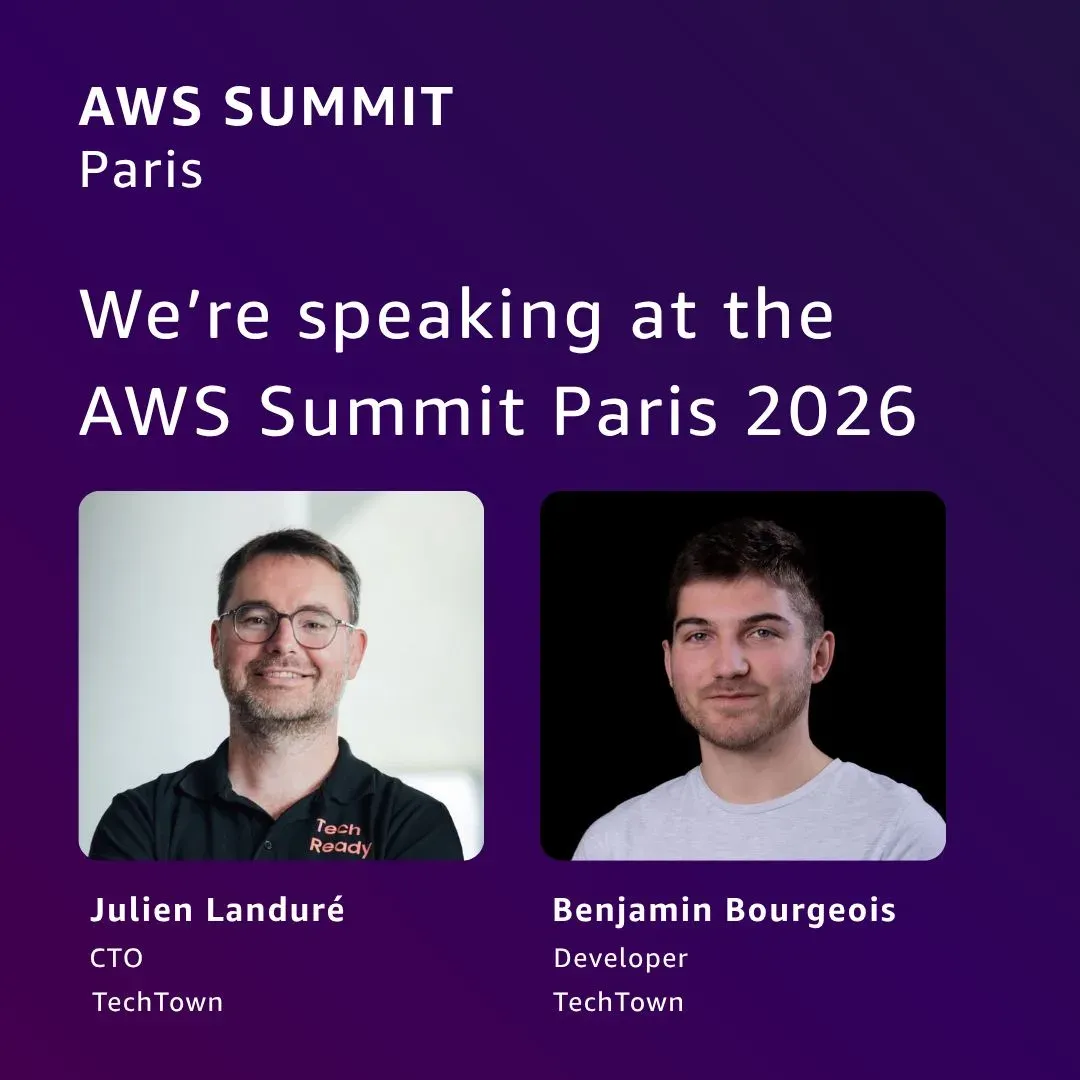
Benjamin and I, before our first AWS Summit talk together.
A packed Developer Community Zone
235 people came into a room built for 100. That is a 235% fill rate.
Kiro was also easy to find around the event. In the AWS Village, this wall summed up the product in one sentence: an agentic AI development environment that brings structure to AI coding.
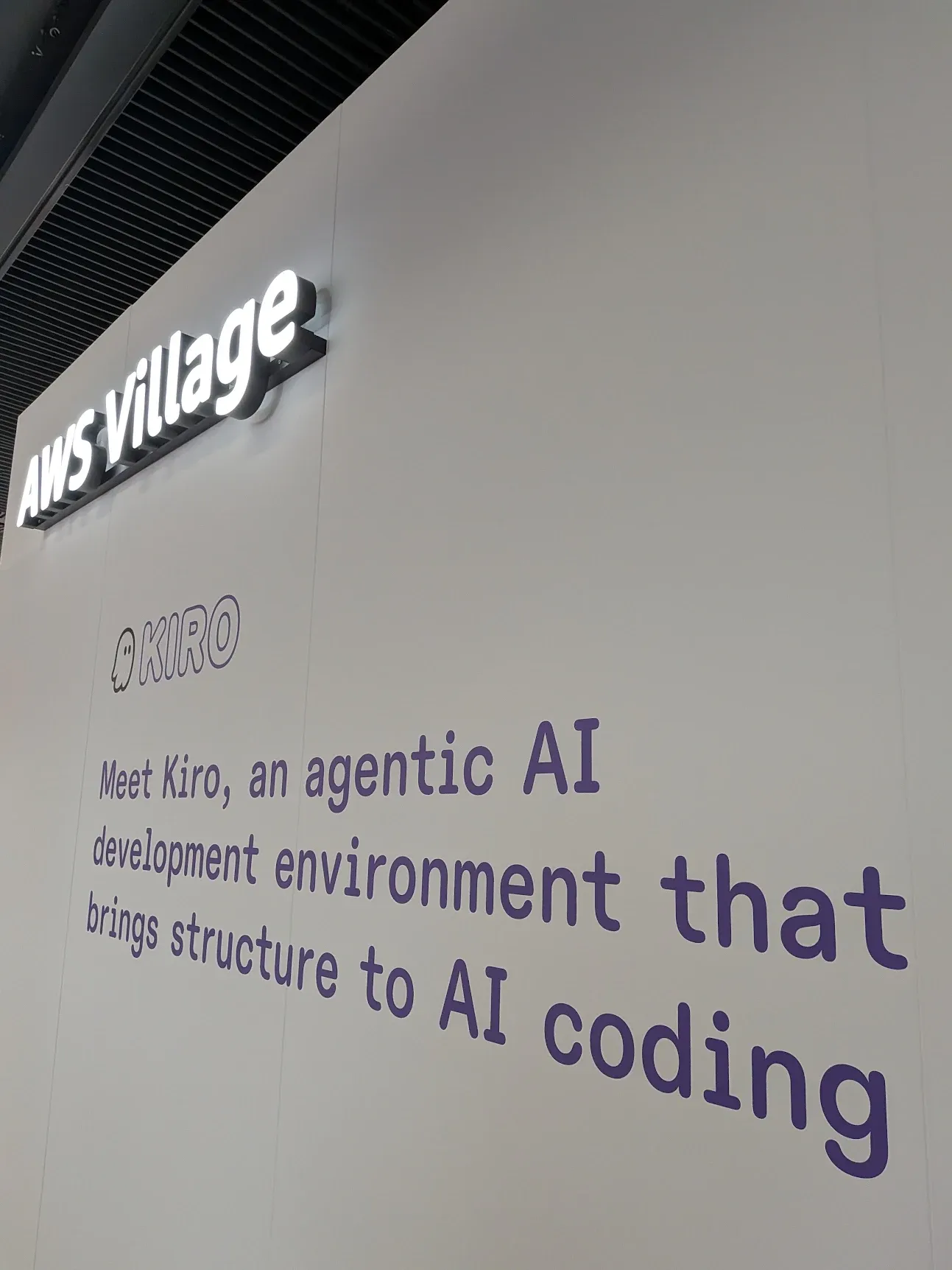
Kiro in the AWS Village at AWS Summit Paris 2026.
If you want the photos from the day, they are on my LinkedIn posts: the session announcement and the recap after the Summit.
Don’t code alone, steer your agents
Kiro is the agentic IDE from AWS. It is more than a code editor. It helps you build applications with an AI-native workflow, while you keep control of quality.
We started with a simple story of the last few years:
- We ask an AI for help.
- We use autocomplete.
- We now work with code agents.
Chat-only workflows have limits:
- A new conversation can lose the context.
- The context window is limited.
- The context is hard to share with the team.
This is why we talked about the Augmented Developer. You do not let the agent guess. You steer it. You write the intent first. Then the agent writes the code.
The developer becomes the person who guides the agents, not the person who types every line.
Spec-Driven Development in Kiro
The main idea of the talk was Spec-Driven Development (SDD).
In Kiro, a prompt can become a structured specification before any code is generated. You can review the intent, the design, and the tasks. Then you let agents implement the work.
A spec in Kiro usually has three files:
requirements.md— what we want, with user stories and acceptance criteriadesign.md— how we will build ittasks.md— the steps to implement
You validate the specification first. You generate code second. That is the difference with a long prompt that jumps straight to files.
One attendee summed it up well: they understood how Kiro turns development into an AI-native workflow, where prompts become structured specs before code generation. They also learned how to steer code agents, automate tests and documentation, and keep control while going faster.
The result we wanted people to leave with: more automation, less guesswork, and better control of the final code.
Practices of the Augmented Developer
We also shared practices that help you get useful code from agents, not just fast code.
- Context Engineering: give the agent the right context, not a bigger prompt.
AGENTS.md: a project file that is added to the agent context automatically.- Steering: markdown files that keep your team rules and conventions across chats.
- Skills: reusable packages with a prompt, examples, and scripts.
- MCP (Model Context Protocol): connect the agent to external tools and data.
- Hooks: run tests, linters, or docs when a file is saved or a task ends.
We showed this live on stage. The goal was not to replace developers. The goal was to help developers stay the person who decides.
ProTip: before you ask Kiro to generate a feature, ask it to write the spec. Read requirements.md and design.md. If the intent is wrong, fix the spec. Do not fix 20 generated files.
The feedback that made me smile
AWS later sent us the official session scores. They are based on 19 survey responses:
- Content: 4.74 / 5
- Speaker: 4.79 / 5
- Tech depth: 4.68 / 5
- Learned something new: 94.7%
One written comment was simple and kind: “Très instructif.”
AWS also turned the feedback into a song title, just for fun: Come Together, by The Beatles. Two speakers, one story, and a room that came together. That made me smile.
I ended the day at a community dinner with the AWS team. After a first Summit talk, it was a pleasure to meet people, talk about Kiro, and hear what developers want to try next.
What I take from this first Summit talk
I am very proud of this first talk at AWS Summit. Sharing the stage with Benjamin felt natural. Seeing 235 people in a 100-seat room was a strong signal: developers want to understand how to work with agents, not only how to prompt them.
If you missed the session, start here:
- Open the slides.
- Open kiro.dev.
- Sign in with an AWS Builder ID.
- Write a small spec before you generate code.
- Add an
AGENTS.mdor a steering file, so the agent knows your project rules.
Have you tried Spec-Driven Development yet? I would love to hear how you steer your agents.
Useful links